



Kirk Brothers Chevrolet of Vicksburg

Blog / Chevrolet Dealership

Can You Charge an Equinox EV at Home in Vicksburg?

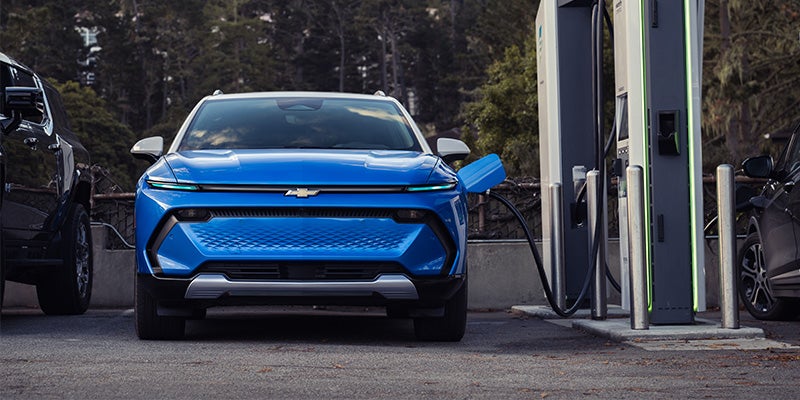
Charging 2027 Chevy Equinox
Yes. You can charge an Equinox EV at home with compatible charging equipment and a suitable electrical connection. A standard household outlet can add charge slowly, while a properly installed Level 2 setup uses 240-volt power to charge faster. Which option fits your week depends on how far you drive, where you park, and the electrical capacity of your home.
Our Blazer EV and Equinox EV comparison helps shoppers choose between the SUVs. Here is what charging an Equinox EV at home can look like after you bring one home.

Standard outlet or Level 2: What changes?

Level 1 charging uses a suitable three-prong, 120-volt household outlet and a compatible charge cord. It adds range gradually, so it may help you top off after short drives or when you have plenty of time parked at home. If you regularly drive longer distances, relying on a standard outlet alone may leave you needing more charging time than your schedule allows.
Level 2 charging uses a suitable 240-volt outlet and compatible equipment or a professionally installed, hardwired home charger. It charges faster and is often more convenient when you need to replace a typical day’s driving overnight. Actual charging speed depends on the equipment, the vehicle’s charging capability, settings, and battery conditions. Check which charging cord or wall unit comes with, or is available for, the Equinox EV you are considering; do not assume one is included.

What should you check before installing home charging?

Start with where the Equinox EV will park. The charging cable needs to reach the vehicle comfortably without stretching across a walkway or relying on an extension cord. Then ask a qualified electrician to assess the outlet or proposed charger location, available electrical capacity, circuit and panel, and whether wiring or other work is needed. For a Level 2 installation, ask for a quote that covers the charger or outlet, labor, and any applicable permit requirements. If you rent or live in a property with shared parking, discuss installation approval with the property owner or manager first.
Chevrolet advises having a qualified electrician verify that an outlet and electrical system are suitable for EV charging. Its guidance also says not to use extension cords, power strips, or similar devices between the wall and charging cord. Installation needs vary by home, so an electrician can tell you what your particular setup requires.

How could charging fit into a normal week?

Suppose you drive around Vicksburg on weekdays and make a longer trip on Saturday. You could plug in when you get home on the nights you need a top-up, then check the Equinox EV’s displayed charge and estimated range before the weekend. If the longer drive needs more energy than a standard outlet can add in time, plan for Level 2 home charging or a suitable public charging stop.
The vehicle’s Charging app lets you choose when charging begins, set a target charge level, and create a home schedule. That makes it easier to plan around departure times or an electricity rate that varies by time of day, if your utility offers one. You do not have to run the battery down before plugging in. Revisit your routine as you learn how your commute, weather, and trips affect the range you see.
Have questions about charging equipment on a particular vehicle? Browse new Chevrolet inventory at Kirk Brothers Chevrolet of Vicksburg and ask our team to walk through the Equinox EV’s charging settings and compatible home options with you.

Suggested image alt tags

  • “Chevrolet Equinox EV plugged into a home charging station”
  • “Equinox EV charging cord connected to a suitable household outlet”
  • “Wall-mounted Level 2 charger next to a parked Chevrolet Equinox EV”
  • “Charging schedule displayed on a Chevrolet Equinox EV center screen”
Match each alt tag to the actual photo and charging equipment shown.

Posted in:

Related Posts

Chevy Service Trailer Brake System

What Does "Service Trailer Brake System" Mean on Your Chevy Truck?

Few dashboard messages get a truck owner's attention faster than " Service Trailer Brake System." It usually appears just as you're preparing to tow, which is hardly ideal. Fortunately, the warning doesn't always point to a major repair. In many cases, it's alerting you that your truck has detected a problem somewhere within the trailer brake system or the connection between the truck and trailer. Understanding what the message means can help you respond appropriately before heading down the road. How the Integrated Trailer Brake System Works Many Chevrolet Silverado and Silverado HD models are equipped with an integrated trailer brake controller designed to work with electric trailer brakes. Rather than applying trailer brakes independently, the system communicates with the trailer and adjusts braking force in proportion to how firmly you apply the truck's brakes. The result is smoother, more controlled stopping, particularly when towing heavier loads. If the truck detects a fault that could affect this communication, it displays the Service Trailer Brake System message. What Causes the Warning to Appear? Several conditions can trigger the alert. A loose trailer connector is among the most common. Corrosion, moisture, bent terminals, or damaged wiring inside the trailer plug can interrupt communication between the truck and trailer. Electrical issues may also be responsible. A blown fuse, damaged trailer wiring harness, low system voltage, or a concern within the integrated trailer brake controller can all generate the warning. Occasionally, the message appears even when no trailer is connected. That typically indicates the truck has detected an electrical fault requiring further diagnosis. Can You Continue Towing? That depends on the cause, but caution is always appropriate. If the integrated trailer brake controller isn't functioning correctly, your trailer's electric brakes may not operate as intended. That increases stopping distances and places additional braking demands on the truck itself. If the warning appears while towing, reduce speed, leave additional space between vehicles, and arrange to have the system inspected as soon as practical. Ignoring the message is rarely a good strategy, particularly when towing heavier trailers. A Few Things You Can Check Yourself Before scheduling service, there are several simple inspections worth performing. Disconnect the trailer plug and inspect the terminals for corrosion, dirt, moisture, or physical damage. Reconnect it securely to confirm the connection is fully seated. If you're towing your own trailer regularly, inspect the trailer wiring for obvious damage or worn insulation. It's also worth checking the appropriate fuse listed in your owner's manual to confirm it hasn't failed. If the warning remains after those basic checks, professional diagnosis is the next logical step. Professional Diagnosis Saves Time Modern trailer brake systems rely on electronic communication between multiple control modules. Factory diagnostic equipment allows technicians to retrieve stored fault codes, test controller operation, inspect wiring integrity, and determine precisely why the warning appeared. That approach is considerably more efficient than replacing parts based on guesswork. If you're searching for Chevrolet service, Silverado service, trailer brake repair, or truck maintenance around Vicksburg, diagnosing trailer brake warnings promptly helps keep your truck ready for work and recreation alike. Schedule Service for Your Chevy Truck at Kirk Brothers Chevrolet If your truck is displaying a Service Trailer Brake System message, now is the right time to have it inspected before your next towing trip. Visit us serving Vicksburg, MS, or schedule your appointment online. Our factory-trained technicians can diagnose the warning, identify the cause, and help restore the confidence you expect every time you hitch up your trailer.

Chevrolet Alignment Service

Why Your Chevrolet Tires May Be Wearing Down Where You Cannot See It

There is something about tire wear. It happens one revolution at a time, thousands of times each mile, until one day a technician points to the inside edge of a tire and asks a simple question: "Have you seen this?" Most drivers haven't. The damage is often hidden beneath the vehicle, long before it becomes visible from the curb. By then, what could have been corrected with a routine alignment may have shortened the life of an otherwise healthy set of tires. The Geometry Beneath the Drive A wheel alignment is, at its heart, an exercise in geometry. Chevrolet engineers specify precise angles, camber, caster, and toe, that allow each tire to meet the road with measured intent. The tire should roll, not scrub. It should carry its share of the load evenly across the tread, not sacrifice one shoulder while the rest remains untouched. Strike a pothole, climb a curb a little too confidently, or simply accumulate enough miles over imperfect pavement, and those carefully chosen angles can begin to drift. The result is subtle at first. The consequences are not. Your Chevrolet Usually Leaves Clues An alignment rarely announces itself dramatically. The steering wheel may settle slightly off-center. The vehicle may wander gently toward one side of the lane. Highway driving may require more steering correction than it once did. The tires tell an even more revealing story. Feathered tread blocks, uneven shoulder wear, or a tire that feels rough in one direction and smooth in the other all suggest the contact patch is no longer meeting the road as intended. These are not merely signs of wear. They are evidence of changing geometry. Why the Damage Often Goes Unnoticed Most people inspect only what they can easily see. The outer sidewall looks healthy. The tread visible from the driveway appears perfectly acceptable. Meanwhile, the inner shoulder—hidden beneath the suspension—continues wearing away, unnoticed for months. This is one reason routine tire rotations are so valuable. Once the wheels are removed, uneven wear patterns become immediately apparent, allowing small alignment corrections before tire replacement becomes necessary. Alignment Is About More Than Tire Life Even tire wear is only part of the story. Proper alignment contributes to predictable steering, stable braking, and efficient rolling resistance. A vehicle that tracks cleanly down the road asks less of both its tires and its driver. If you're searching for Chevrolet tire service, wheel alignment, or Chevrolet maintenance in Vicksburg, periodic alignment inspections remain one of the simplest ways to protect both ride quality and long-term operating costs. When Should Alignment Be Checked? An annual inspection is a sensible starting point, but circumstances often dictate the schedule. A significant pothole, curb strike, suspension repair, or the installation of new tires all provide excellent opportunities to verify alignment. Likewise, any noticeable change in steering feel or tire wear deserves prompt attention. Waiting until the tread is visibly worn usually means the process has been underway for quite some time. Schedule Chevrolet Alignment Service at Kirk Brothers Chevrolet If your steering wheel no longer sits perfectly straight, your vehicle has begun drifting, or your tires haven't been inspected recently, now is an ideal time for a professional alignment evaluation. Visit us in Vicksburg, MS, or schedule your Chevrolet alignment service online. Our factory-trained technicians can inspect your suspension geometry, identify uneven tire wear before it becomes costly, and help your Chevrolet continue driving exactly as it was engineered to.

Truck Service

Before You Tow This Summer: A Chevy Truck Service Checklist for Vicksburg, MS

Summer in Mississippi means heat, humidity, and plenty of reasons to hitch up the trailer. If you're hauling a boat to the river or moving equipment across the state, getting your truck ready before you go is important. Summer truck service in Vicksburg, Mississippi is more than a routine stop - it's the first step toward a safe and stress-free season on the road. more Why Summer Heat Makes Pre-Tow Service So Important Mississippi summers are tough on vehicles. High temperatures put extra strain on your engine, cooling system, and tires - especially when you add the weight of a trailer. A truck that handles a normal drive just fine can struggle quickly when towing in 95-degree heat without proper preparation. Check Your Cooling System First When towing in summer heat, your engine works harder and runs hotter than usual. That means your cooling system needs to be in top shape. Have the coolant level and condition inspected and make sure your hoses and radiator show no signs of wear or leaks. Overheating while towing is one of the most common issues drivers face in warm climates - and it's largely preventable with a quick cooling system check before you hit the road. Inspect Your Brakes and Transmission Towing adds significant stress to your brakes and transmission. Before hauling anything heavy this summer, have your brake pads and fluid checked for wear and proper levels. Transmission fluid should also be inspected to make sure it's clean and full - degraded fluid can cause serious damage when your truck is working hard under load. Tires, Hitch, and Electrical Connections Tire condition is critical before any tow. Check tread depth, look for uneven wear, and confirm that all tires - including the spare - are inflated to the correct pressure. Underinflated tires and towing don't mix, particularly in summer heat when tire pressure fluctuates. Beyond the tires, walk around your hitch setup and verify that the ball mount is secure, the coupler is locked, and safety chains are properly connected. Test your trailer's brake lights, turn signals, and running lights before leaving the driveway. A Chevy towing checklist should always include these electrical connections - a burned-out trailer light can result in a ticket or, worse, an accident. Don't Forget Engine Oil and Battery Health Fresh engine oil is especially important in summer when operating temperatures are already elevated. If you're close to your next oil change interval, it's worth completing it before a long tow. At the same time, have your battery tested. Heat is one of the leading causes of battery failure, and a battery that's borderline in spring may not hold up through a hot Mississippi summer Visit Kirk Brothers Chevrolet of Vicksburg Before Your Next Haul Getting your Chevy truck summer-ready doesn't have to be complicated. Drivers can bring their vehicles into Kirk Brothers Chevrolet of Vicksburg for a thorough inspection and have a trained technician walk through everything your truck needs before tow season kicks into full gear. Visit us online at kirkbrotherschevroletofvicksburg.com to schedule your service appointment today.