



If your Chevy displays an "Engine Power Reduced" warning, the vehicle has detected a condition that may limit acceleration, engine performance, or maximum speed. Possible causes include electronic throttle control problems, faulty engine sensors, intake system leaks, or other issues affecting the engine's operation. Some newer Chevrolet models display a similar message reading "Reduced Acceleration Drive With Care." Whether you drive a Chevrolet Silverado, Equinox, Traverse, Tahoe, or Malibu, this warning deserves attention because your vehicle may not accelerate normally when merging or passing. For drivers in Vicksburg, MS, understanding the warning can help you recognize concerning symptoms and determine when professional engine diagnostics are needed.
Schedule Chevrolet Engine Diagnostics Explore Chevrolet Certified Service
What Does "Engine Power Reduced" Mean on a Chevrolet?
The Engine Power Reduced warning means your Chevrolet has limited available engine or propulsion power in response to a detected condition. Depending on the problem, the vehicle may accelerate more slowly, respond differently to the accelerator pedal, or operate with a reduced maximum speed.
Modern Chevrolet vehicles use electronic control systems to monitor engine performance. These systems receive information from sensors associated with the throttle, intake system, fuel delivery, engine temperature, and other components.
When the vehicle detects certain conditions, its control system may reduce available power to help protect components or manage the malfunction.
Drivers sometimes refer to this behavior as "limp mode," although that is a general term rather than a specific diagnosis.
For example, a Chevrolet Silverado traveling along I-20 near Vicksburg may suddenly feel sluggish when the driver presses the accelerator.
In another situation, a Chevrolet Equinox may display a reduced acceleration warning even though the driver has not yet noticed a significant change in performance.
The dashboard message identifies the symptom, but it does not reveal which component needs repair.
Chevrolet recommends having persistent or recurring reduced-power warnings inspected as soon as possible.
What Causes a Chevy Engine Power Reduced Warning?
Several different mechanical and electronic conditions can cause a Chevrolet to limit engine performance.
Possible causes include:
- Electronic throttle body problems: The throttle may not respond correctly to commands from the engine control system.
- Accelerator pedal position sensor faults: The system may receive incorrect information about how much acceleration the driver is requesting.
- Airflow sensor problems: Incorrect intake-air measurements can affect engine management.
- Intake or turbocharger plumbing leaks: Damaged or disconnected hoses can interfere with airflow and boost pressure on applicable engines.
- Engine misfires or fuel delivery issues: Problems involving combustion or fuel supply can contribute to poor performance.
- Cooling or lubrication concerns: Certain serious engine operating conditions can result in power limitations or other protective responses.
- Electrical and wiring faults: Damaged connections or communication problems can interfere with engine controls.
These causes do not apply equally to every Chevrolet model or model year.
A Silverado with a gasoline V8, a turbocharged Equinox, and a Duramax-powered truck have different engine components and diagnostic requirements.
Professional testing helps determine which system is responsible.
1. Electronic Throttle Body Problems
One possible cause of reduced engine power is a problem with the electronic throttle body.
The throttle body regulates airflow entering a gasoline engine. On modern Chevrolet vehicles, its operation is controlled electronically rather than through a traditional mechanical accelerator cable.
The engine control module uses information from several sensors to determine the appropriate throttle position.
If the system detects a problem involving throttle position or throttle operation, it may limit engine power.
Signs of a Possible Throttle Control Problem
- Reduced response when pressing the accelerator.
- An Engine Power Reduced warning.
- Unusually slow acceleration.
- Rough or inconsistent engine operation.
- A check engine light appearing with the warning.
- A warning that disappears and later returns.
For example, a Chevrolet Silverado may begin responding sluggishly to accelerator input during normal driving around Vicksburg.
Although an electronic throttle fault is one possible explanation, it is not the only cause.
Does Engine Power Reduced Mean the Throttle Body Needs Replacement?
No. A reduced-power warning does not automatically mean the throttle body needs to be replaced.
General Motors has published service bulletins identifying situations where reduced-power complaints were associated with throttle sensor readings, wiring, or intake connections.
Some of those bulletins specifically instruct technicians to complete additional diagnostic procedures rather than immediately replacing the throttle body.
Before recommending replacement, a technician should identify the applicable diagnostic trouble codes and evaluate the components involved.
2. Accelerator Pedal Position Sensor Problems
Modern Chevrolet vehicles use an electronic accelerator pedal system to communicate the driver's requested acceleration to the engine controls.
The accelerator pedal position sensor provides information about pedal movement.
The control module compares that information with other sensor readings to determine the appropriate engine response.
If the system detects inconsistent or unreliable information, it may reduce available engine power.
What Does a Failing Accelerator Sensor Feel Like?
Depending on the fault, symptoms may include delayed acceleration, limited engine response, or a dashboard warning.
For example, a Chevrolet Tahoe traveling through traffic around Vicksburg may not respond as expected when the driver attempts to accelerate.
However, a sluggish accelerator does not establish that the pedal sensor is defective.
Airflow problems, engine misfires, fuel delivery concerns, and other conditions can produce similar symptoms.
Diagnostic testing can help determine whether the accelerator pedal signals are functioning correctly.
3. Airflow Sensors and Intake System Problems
Engines need an appropriate mixture of air and fuel to operate efficiently.
Electronic engine controls use sensor information to monitor airflow, intake pressure, and other operating conditions.
Depending on the Chevrolet model, components may include a mass airflow sensor, manifold pressure sensor, and related intake-system sensors.
If the engine receives incorrect airflow information or a significant intake-system leak develops, performance may be affected.
Possible Symptoms of an Intake or Airflow Problem
- Hesitation during acceleration.
- Reduced engine power.
- A check engine warning.
- Rough idle or inconsistent running.
- Unusual intake or turbocharger-related sounds on applicable engines.
For example, a Chevrolet Equinox with a turbocharged engine may experience reduced acceleration because of an issue involving the air intake or boost system.
However, replacing an airflow sensor without verifying its operation may not correct the problem.
A technician may need to inspect sensor readings, intake connections, hoses, and other components.
4. Turbocharger or Charge-Air System Problems
Some Chevrolet engines use turbochargers to increase the amount of air entering the engine.
These systems depend on properly connected intake hoses, charge-air components, pressure sensors, and boost controls.
If a hose becomes damaged or disconnected, the engine may not receive the airflow or boost pressure expected by its control system.
Depending on the condition, this can produce a noticeable loss of power.
Can a Turbocharged Chevy Equinox Experience Reduced Power?
Yes. General Motors has published diagnostic information for certain Chevrolet Equinox models equipped with 1.5L turbocharged engines.
In a February 2026 technical bulletin covering applicable 2023–2026 Equinox vehicles, GM identifies potential reduced-power conditions associated with charge-air inlet hoses and boost-system operation.
Depending on the diagnostic codes, technicians may need to inspect hoses for leaks, damage, swelling, collapse, or improper connections.
This does not mean every Equinox reduced-power warning is caused by an intake hose.
It demonstrates why model-specific diagnostic procedures matter when investigating engine performance problems.
Drivers should avoid attempting to disconnect pressurized or hot engine components without appropriate training.
5. Engine Misfires and Fuel Delivery Problems
Engine misfires occur when one or more cylinders do not complete combustion as intended.
Possible causes include ignition system problems, fuel delivery faults, and certain mechanical conditions.
Depending on the severity and type of problem, a Chevrolet may experience rough running, hesitation, reduced acceleration, or engine warning messages.
What If My Chevy Is Shaking and Has Reduced Engine Power?
If your Chevrolet shakes noticeably, idles roughly, or struggles to accelerate, the engine may have a combustion-related problem that needs attention.
For example, a Chevrolet Malibu traveling near Edwards might begin shaking during acceleration while displaying the check engine light.
Possible causes include:
- Worn or malfunctioning spark plugs on gasoline engines.
- Faulty ignition coils.
- Fuel injector problems.
- Fuel supply issues.
- Airflow-related faults.
- Other mechanical or electronic engine problems.
A flashing check engine light is particularly concerning because it may indicate a condition that could damage the emissions system.
If the engine is shaking severely, running poorly, or the check engine light is flashing, reduce speed, avoid hard acceleration, and stop safely to arrange assistance.
Do not assume the issue can be corrected by continuing to drive.
6. Engine Overheating or Low Oil Pressure
Reduced engine performance can sometimes occur alongside more serious engine operating problems.
For example, a cooling system fault may cause the engine temperature to rise beyond its normal range.
Low oil pressure can also create a serious risk of engine damage.
These conditions require particular attention because continued operation can result in substantial mechanical damage.
What If Engine Power Reduced Appears With an Overheating Warning?
If your Chevrolet displays an engine overheating warning, stop safely and follow the instructions in the owner's manual.
Do not continue driving normally while the engine is overheating.
Never remove a radiator cap or pressurized coolant reservoir cap while the engine is hot.
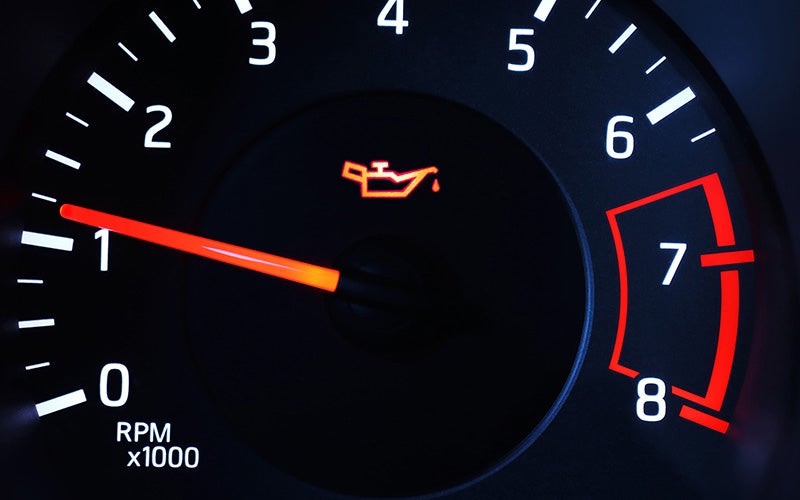
What If the Oil Pressure Warning Comes On?
If the engine oil pressure warning appears while driving, stop safely and shut off the engine according to the manufacturer's instructions.
Insufficient lubrication can quickly damage internal engine components.
A reduced-power warning combined with overheating, low oil pressure, or other serious symptoms should not be treated as a routine throttle sensor issue.
For more information, read our guide to Chevrolet oil pressure warnings.
Engine Power Reduced: Common Symptoms and Possible Causes
The way your vehicle behaves can provide useful information when explaining the problem to a technician.
| Symptom | Possible Cause | Recommended Action |
|---|---|---|
| Sluggish response to accelerator input | Throttle control, accelerator sensor, or engine-management fault | Schedule engine diagnostics |
| Reduced power with check engine light | Engine control, airflow, fuel, or other fault | Have the relevant trouble codes evaluated |
| Reduced power under acceleration | Intake leak, boost-control problem, or another engine fault | Arrange diagnostic testing |
| Reduced power with rough running | Possible misfire or fuel delivery problem | Avoid demanding driving and seek service promptly |
| Reduced power with flashing check engine light | Potentially serious engine or emissions-related malfunction | Stop safely and arrange assistance |
| Reduced power with overheating warning | Potential cooling system or engine problem | Stop safely and follow the owner's manual |
| Reduced power with low oil pressure warning | Potential engine lubrication problem | Stop safely, shut off the engine, and seek assistance |
| Warning disappears but later returns | Possible intermittent sensor, electrical, or mechanical fault | Schedule diagnostics even if performance temporarily returns |
These symptoms can help guide an inspection, but they cannot confirm the failed component without testing.
Is It Safe to Drive With "Engine Power Reduced" Displayed?
Whether you can continue driving depends on the warning, the vehicle's actual performance, and any additional symptoms.
Some Chevrolet owner's manuals explain that if the message appears without a noticeable performance reduction, the driver may be able to proceed to a destination while arranging service.
However, the vehicle's maximum acceleration or speed may be reduced, and performance can change unexpectedly.
For drivers traveling along I-20 near Vicksburg, a sudden loss of acceleration can be especially concerning when merging, passing, or navigating busy traffic.
If the vehicle is operating abnormally, avoid continuing normal highway driving.
What Should You Do When the Warning Appears?
- Stay calm and avoid sudden driving maneuvers.
- Assess whether the vehicle is responding normally.
- Avoid hard acceleration or demanding driving.
- Move to a safe location when possible.
- Check for additional warnings involving engine temperature, oil pressure, or charging.
- Follow the model-specific instructions in your Chevrolet owner's manual.
- Arrange professional diagnostics if the warning remains or returns.
If your Chevrolet cannot maintain a safe speed, loses substantial acceleration, runs severely rough, or displays a critical engine warning, stop in a safe location and arrange roadside assistance or towing.
Do not attempt to continue driving in traffic if the vehicle cannot respond safely.
Why Did My Chevy Suddenly Lose Power While Accelerating?
A sudden loss of acceleration can occur when the engine control system detects a problem and limits available power.
However, reduced acceleration can also occur because of fuel supply problems, intake restrictions, ignition faults, turbocharger-related issues, or other mechanical conditions.
For example, a Chevrolet Traverse traveling from Vicksburg toward Clinton may respond normally at lower speeds but hesitate when the driver requests additional power.
The underlying problem may become more noticeable during acceleration because the engine's airflow, fuel, and power requirements increase.
However, the circumstances alone do not establish the cause.
If your vehicle has difficulty accelerating without displaying the Engine Power Reduced message, other systems may also need inspection.
Our related article, Why Is Your Chevy Shifting Hard or Hesitating?, discusses additional drivability symptoms that can involve transmission or engine operation.
Why Does Engine Power Reduced Come On and Then Go Away?
Some Chevrolet owners experience a reduced-power warning that appears intermittently.
The warning may disappear after the vehicle is restarted or after driving conditions change.
However, a warning that disappears does not necessarily mean the underlying problem has been repaired.
For example, an intermittent electrical connection may temporarily function correctly before triggering another fault.
Likewise, a problem that appears only when the engine is under load may not be noticeable during normal idling.
Keep track of when the warning occurs, including whether it happens during acceleration, after extended driving, or under certain engine temperatures.
This information may help technicians reproduce the issue and identify the cause.
Will Restarting My Chevy Fix the Engine Power Reduced Warning?
Restarting the vehicle may temporarily clear certain messages or restore normal operation under some conditions.
However, restarting does not repair a malfunctioning sensor, intake leak, damaged wiring connection, or other underlying problem.
Chevrolet's procedures also vary by model and year.
Some newer models include specific restart guidance for reduced-propulsion conditions, while others use different messages and instructions.
If your vehicle is overheating, has low oil pressure, or is experiencing another critical malfunction, do not repeatedly restart the engine in an attempt to clear the warning.
Instead, follow the owner's manual's safety instructions and arrange professional assistance.
Clearing diagnostic trouble codes or disconnecting the battery can also remove useful information without correcting the underlying fault.
Can a Dirty Air Filter Cause Reduced Engine Power?
A severely restricted engine air filter can affect airflow and engine performance.
However, an ordinary dirty filter does not automatically explain a Chevrolet's Engine Power Reduced warning.
The warning may involve electronic throttle controls, sensors, intake plumbing, engine operation, or other systems that require specific diagnostic testing.
Replacing a filter without confirming the problem may not resolve the warning.
For this reason, a technician may inspect the intake system while also examining relevant electronic data and diagnostic trouble codes.
The correct maintenance or repair depends on the actual findings.
What Do Chevrolet Engine Codes P2135, P0299, and P1101 Mean?
Some reduced-power complaints are associated with diagnostic trouble codes that provide additional information about the affected system.
Examples include:
- P2135: Throttle position sensor correlation problem.
- P0299: Turbocharger or supercharger underboost condition.
- P1101: Intake airflow system performance problem on applicable GM vehicles.
These codes do not appear on every vehicle with an Engine Power Reduced warning.
They also do not independently prove that a particular component needs replacement.
For example, GM has documented certain reduced-power conditions involving charge-air hoses that can produce airflow or boost-related fault codes.
In those situations, replacing a sensor would not necessarily correct a damaged or disconnected hose.
Likewise, a throttle correlation code may require inspection of sensor signals, wiring, and related components.
Accurate diagnostics involve identifying the codes and following the appropriate testing procedures for that specific Chevrolet.
How Do Chevrolet Technicians Diagnose Reduced Engine Power?
Because several systems can produce similar performance symptoms, diagnosing a reduced-power warning often requires more than reading a single trouble code.
Depending on the vehicle and symptoms, an inspection may include:
Diagnostic Trouble Code Scan
Technicians retrieve stored and active fault codes from the engine control module and other relevant systems.
These codes help identify which components or operating conditions require investigation.
Throttle Control Testing
The electronic throttle body, accelerator pedal position signals, and related controls may be evaluated when the diagnostic information indicates a throttle-related problem.
Airflow and Intake Inspection
Technicians may inspect engine air intake components, hoses, sensors, and connections for restrictions or leaks.
Turbocharger and Boost System Evaluation
On turbocharged engines, an inspection may include boost pressure data, charge-air plumbing, and applicable turbocharger controls.
Ignition and Fuel System Testing
If the engine runs roughly or diagnostic information suggests a combustion problem, technicians may evaluate relevant ignition, fuel, and engine operating components.
Cooling and Lubrication System Inspection
When temperature or oil pressure warnings are involved, the inspection may prioritize those concerns to prevent additional engine damage.
Electrical System Testing
Wiring, connectors, power supplies, and electronic communication may need inspection when electrical faults are suspected.
At Kirk Brothers Chevrolet of Vicksburg's Certified Service Department, our technicians can investigate engine warnings and determine the appropriate diagnostic procedures.
The correct repair depends on the vehicle's symptoms, diagnostic findings, and applicable Chevrolet service information.
Can Regular Maintenance Prevent Engine Power Reduced Warnings?
Routine maintenance can help keep a Chevrolet's engine operating as intended, but it cannot prevent every electronic or mechanical problem.
Following the manufacturer's maintenance schedule supports the health of systems involved in engine performance.
Important maintenance considerations include:
- Changing engine oil according to the recommended schedule.
- Inspecting and replacing engine air filters when appropriate.
- Maintaining the cooling system.
- Addressing existing check engine warnings.
- Following recommended spark plug and ignition maintenance.
- Inspecting damaged or leaking engine components when symptoms appear.
- Using appropriate fuels and fluids.
For drivers around Vicksburg, regular inspections can be helpful before longer highway trips or periods of heavy vehicle use.
However, an Engine Power Reduced warning requires diagnosis even when routine maintenance is up to date.
When Should You Schedule Chevrolet Engine Diagnostics?
Schedule professional service if your Chevy experiences any of the following:
- An Engine Power Reduced message remains displayed.
- The warning repeatedly disappears and returns.
- Acceleration becomes unusually sluggish.
- The vehicle hesitates or struggles to maintain normal speed.
- The check engine light appears with reduced performance.
- The engine runs roughly or shakes during acceleration.
- The warning begins after engine or intake-system repairs.
- Several electronic engine warnings appear together.
If the vehicle also shows signs of overheating, critically low oil pressure, severe misfiring, or substantial loss of acceleration, stop safely and arrange appropriate assistance instead of continuing to drive.
For Chevrolet owners in Vicksburg, Bovina, Edwards, and Tallulah, professional diagnostics can help identify the underlying condition before further driving.
Frequently Asked Questions About Chevy Engine Power Reduced Warnings
What does Engine Power Reduced mean on my Chevy?
Engine Power Reduced means the vehicle has limited available propulsion power because of a detected condition. This may reduce acceleration or maximum speed. The warning can involve multiple mechanical or electronic systems, so professional diagnosis is recommended when it persists or returns.
What is the most common cause of reduced engine power on a Chevy?
Electronic throttle control faults are one possible cause, but reduced-power warnings can also result from intake leaks, airflow sensor problems, engine-management faults, or other conditions. There is no single cause that applies to every Chevrolet model.
Can a bad throttle body cause Engine Power Reduced?
Yes. An electronic throttle body malfunction can cause reduced engine performance. However, sensor wiring, intake problems, and other faults can create similar symptoms. Testing should confirm the cause before replacing the throttle body.
Can a Chevy Equinox display Reduced Engine Power because of a turbocharger problem?
Yes. On applicable turbocharged Equinox models, certain boost-control or charge-air system problems can cause reduced power. GM has published diagnostic guidance for specific Equinox model years and engines involving intake hoses and turbocharger-related fault codes.
What does Reduced Acceleration Drive With Care mean?
This warning appears on certain newer Chevrolet vehicles when available propulsion power has been reduced. Acceleration or maximum speed may be limited. Follow your owner's manual and arrange service if the warning remains or returns.
Can I drive my Chevy with Engine Power Reduced displayed?
It depends on how the vehicle is performing and whether other warnings are present. Some Chevrolet manuals permit proceeding to a destination if no performance reduction is observed, but continued driving may be unsafe when acceleration is substantially limited. Follow your owner's manual and stop safely if the vehicle cannot operate normally.
Will restarting my Chevy fix Engine Power Reduced?
Restarting may temporarily remove a warning in some situations, but it does not repair the underlying issue. If the message returns, diagnostic service is recommended. Do not restart an overheating engine or one showing a critical oil pressure warning simply to clear the message.
Why is my Chevy shaking with Engine Power Reduced on?
Shaking or rough running may indicate an engine misfire or another combustion-related problem. If the check engine light is flashing or the vehicle is running severely rough, stop safely and arrange assistance rather than continuing normal driving.
Does Engine Power Reduced always turn on the check engine light?
No. A check engine light may appear with reduced engine power, but the warning combinations depend on the underlying fault and vehicle system. Technicians can review stored codes and operating data even when some warnings are no longer displayed.
Can low oil cause Engine Power Reduced?
Certain engine lubrication problems can cause protective responses or serious engine warnings. However, reduced power does not automatically mean the oil level is low. If the oil pressure warning appears, stop safely and follow the manufacturer's instructions to avoid engine damage.
How much does it cost to fix Engine Power Reduced?
Repair costs depend on the underlying problem. A damaged intake hose, sensor fault, wiring repair, or major engine issue can require very different work. Accurate diagnosis is necessary before estimating the repair.
Can Kirk Brothers Chevrolet of Vicksburg diagnose reduced engine power?
Yes. Kirk Brothers Chevrolet of Vicksburg offers Chevrolet Certified Service and vehicle diagnostics. Our service team can investigate engine performance problems and recommend repairs based on the vehicle's diagnostic results.
Schedule Chevrolet Engine Diagnostics at Kirk Brothers Chevrolet of Vicksburg
An Engine Power Reduced warning may indicate an electronic throttle problem, faulty sensor, intake-system issue, engine malfunction, or another condition affecting your Chevrolet's performance.
Because several different problems can produce similar symptoms, identifying the underlying cause is important before replacing parts.
At Kirk Brothers Chevrolet of Vicksburg, our Certified Service team can help diagnose engine warnings, acceleration problems, and other vehicle performance concerns.
Located at 2339 N Frontage Road in Vicksburg, MS, we welcome Chevrolet owners from Bovina, Edwards, Tallulah, LA, and surrounding communities.
Whether your Silverado displays Engine Power Reduced, your Equinox hesitates during acceleration, or your Traverse shows a Reduced Acceleration warning, our service team can help identify the appropriate next steps.
Review our current Chevrolet service and parts specials for applicable offers, or schedule an appointment to have your vehicle inspected.
Schedule Chevrolet Engine Diagnostics Visit Chevrolet Certified Service
This article provides general information about Chevrolet engine power warnings and does not replace professional diagnosis or your vehicle's owner's manual. Warning messages, causes, and service procedures vary by model, model year, and engine. Do not continue driving if the vehicle cannot accelerate or operate safely. Stop safely and seek assistance if the vehicle displays critical oil pressure or overheating warnings, runs severely rough, or experiences another potentially unsafe condition.